
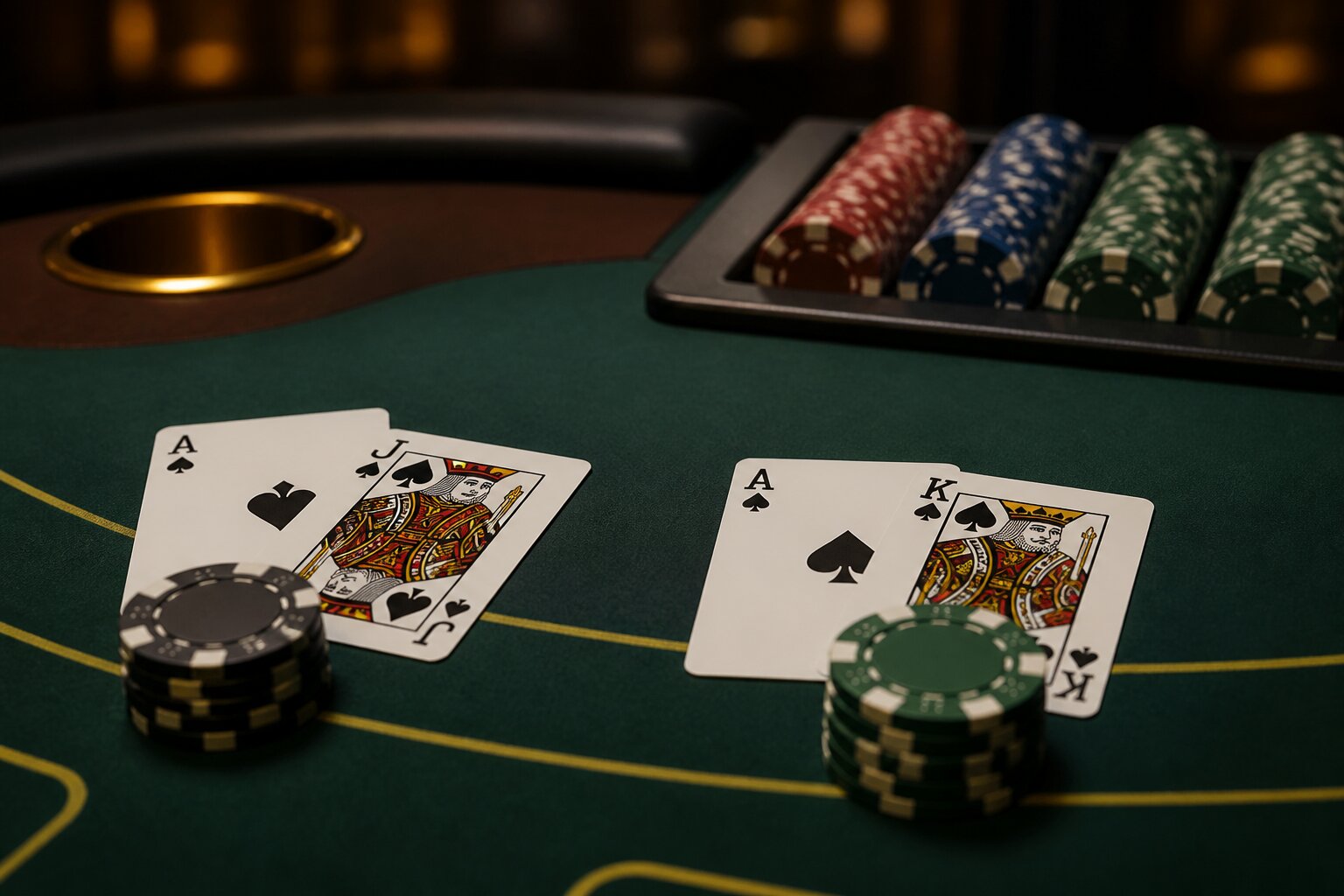
Blackjack is one of the most played casino games, yet tables can vary in subtle but important ways. One of the key differences you’ll spot is how a natural blackjack is paid: either 3:2 or 6:5. That small ratio change affects what you get back on winning hands and, over many plays, how favourable the game is for you.
If you’ve seen both payout types and wondered which to choose, this article breaks down what each means, how they influence the house edge and gameplay, and what to check before you join a table. Read on to make clearer choices at the felt.
What Do 3:2 and 6:5 Blackjack Payouts Mean?
When we talk about 3:2 or 6:5 payouts, we mean the amount paid on a natural blackjack — an Ace paired with a 10-value card on the first two cards.
A 3:2 payout gives £3 for every £2 staked on a blackjack. For a £10 wager, that returns £15 in winnings plus your original £10 stake. A 6:5 payout pays £6 for every £5 bet, so the same £10 bet returns £12 in winnings plus the stake. The practical effect is straightforward: 3:2 returns more on that specific hand than 6:5.
Always check the table or game rules before you play so you know which payout applies. Knowing this one detail helps you compare games and pick the version that best matches your aims.
Why Are There Different Blackjack Payouts?
Historically, 3:2 was the standard payout for a natural blackjack. As casinos and online providers experimented with formats and limits, alternative payouts such as 6:5 were introduced. These alternatives often appear alongside other changes, so a different payout may come with:
- other rule changes that affect play,
- different minimum or maximum bet ranges,
- variations in side bets or table features.
Such combinations create variety across tables and game lobbies, giving operators a way to differentiate games and manage their margins.
Offering multiple payout types lets operators present options for different player preferences and budgets. For the player this means a wider selection, but also the need to check which rules and payouts apply before taking a seat. Knowing the payout you will receive for a natural blackjack is important because it directly affects the house edge and your expected return.
Which Blackjack Payout Offers Better Odds?
Payouts don’t change how cards are dealt or how often a natural blackjack appears, but they do alter the return you receive when that hand occurs. Because 3:2 pays more for a blackjack than 6:5, it gives a better return on those specific hands and generally results in a lower house edge.
That edge matters most over many hands. For a short session you might not notice the difference, but if you play repeatedly the lower payout reduces your expected return. Bearing that in mind helps you match games to your playing style and bankroll.
How Do 3:2 and 6:5 Odds Affect Winnings?
Comparing the two: a £10 bet with 3:2 yields £15 on a blackjack, while 6:5 yields £12. This gap is small per hand but meaningful cumulatively. Over a large number of hands, reduced blackjack payouts lower the overall return a player receives.
This is why many experienced players favour 3:2 tables when other rules are comparable. It’s one clear metric to use when deciding which table offers better value.
Rules Differences in 3:2 vs 6:5 Blackjack
While the payout on a natural blackjack is the main distinction, tables that offer different payouts sometimes pair them with other rule variations. These can include the number of decks in use, whether the dealer hits or stands on a soft 17, and restrictions on splitting or doubling down.
Such rule differences alter strategy and the frequency of particular outcomes. For example, fewer decks can slightly change card distribution probabilities, and whether the dealer hits on soft 17 affects the dealer’s bust chance and therefore the optimal player approach.
Before playing, take a quick look at the table’s rules for splits, doubling and the dealer’s play on soft 17. Those details combine with the payout to determine the overall attractiveness of a game.
How Does House Edge Change With Payout Type?
The house edge is the casino’s built-in advantage, expressed over the long run. Changing the blackjack payout directly affects this edge: moving from 3:2 to 6:5 typically increases the house advantage because the player receives less on natural blackjacks.
A higher house edge doesn’t prevent short-term wins, but it does mean that, on average, players will see a lower return across many hands. No strategy can eliminate this statistical advantage; knowing the edge helps you choose games that align with your objectives.
When comparing tables, consider both payout and the accompanying rules, since some rule sets can partially offset the effect of a reduced blackjack payout, while others may worsen it.
Why Do Casinos Offer 6:5 Blackjack?
6:5 blackjack is offered as part of the wider range of game formats. It may be paired with different stakes or faster play, and for some players those factors are attractive even though the blackjack payout is lower. For operators, offering a mix of formats broadens choice and accommodates varying customer preferences.
For players, the presence of 6:5 tables is simply another option — useful only after you weigh the payout against the other rules and limits in place.
If you prefer higher returns on naturals, choose tables with 3:2 when available; if you value other features on a 6:5 table, be aware of the trade-off.
Are There Any Common Myths About Payouts?
A few misunderstandings circulate about blackjack payouts. One is that a particular payout guarantees better long-term wins; in truth, every game has a house edge and outcomes vary hand to hand. Another is that payout structure affects how often naturals occur — it does not; it only changes the reward when that hand happens.
Some claim there’s a system that can overcome the house edge regardless of payout. No method removes the statistical advantage the house holds over time. What matters is understanding the rules and choosing the setup that fits your goals.
If you’re weighing options, focus on clear facts like payout amounts and rule variations rather than on myths or unproven systems.
How to Tell If a Blackjack Table Pays 3:2 or 6:5?
Most tables display their blackjack payout clearly on signage or in the game’s rules screen online. Look for phrases such as “Blackjack Pays 3:2” or “Blackjack Pays 6:5” near the table, on digital overlays, or in the help section. On electronic tables and apps this information is often shown on the main game lobby or within the round information.
If the payout isn’t visible, ask the dealer or a member of staff; they can confirm the rate. If you are playing remotely, use the chat or support function to check the rules before you start. Confirming the payout before you play prevents surprises and helps you compare tables quickly.
Being aware of the payout is a simple step that makes your choices clearer and helps you pick the most suitable game for your session. Remember that payout type is only one factor to consider alongside table limits and other rules, so take a moment to check all relevant information before placing bets.
Summary: Which Payout Should You Choose?
Choosing between 3:2 and 6:5 comes down to priorities. If maximising returns on natural blackjacks matters most, 3:2 is the preferable option because it delivers higher payouts and generally a lower house edge. If other factors such as table limits or a specific rule set appeal to you, a 6:5 table might still suit your session — but be conscious of the trade-off.
Weigh the payout alongside dealer rules, doubling and splitting conditions, and deck count, then select the table that best aligns with your playing aims. Set sensible limits for stakes and time, and make choices that keep the game enjoyable. With that settled, you’re ready to pick a table and play with confidence.
**The information provided in this blog is intended for educational purposes and should not be construed as betting advice or a guarantee of success. Always gamble responsibly.