
Ever felt stuck with a terrible blackjack hand and wished you could bow out without losing your entire bet? You’re not alone — many players play out weak hands because they aren’t sure a better option exists.
The surrender rule gives you a clear choice to reduce losses on certain two-card hands. Read on to understand what surrender means, when it is available, and how to decide whether it’s the right call at the table. Knowing when surrender is sensible helps you make calmer, clearer choices during play.
What Is The Surrender Rule In Blackjack?
Surrender allows you to forfeit your hand after the first two cards are dealt and receive half of your original bet back. You do this instead of continuing to play the hand, so the dealer collects half your stake and the hand ends.
The option only applies on your initial two-card hand, before you hit, stand or split,. Not every table offers surrender, so checking the rules before you start is important.
Surrender appears in both land-based and digital games, but its availability varies from one version of blackjack to another. Knowing whether it’s offered at your table is the first practical step to using it well.
Types Of Surrender: Early vs Late Explained
There are two common forms of surrender and the timing difference matters for strategy.
Early surrender permits you to give up your hand before the dealer checks for blackjack. This is the more favourable option for the player, although it is rare in most modern casino games.
Late surrender, which is more typical, comes into play only after the dealer has checked for blackjack. If the dealer does have blackjack, surrender is not allowed and you lose the full bet.
Because the distinction affects whether surrender remains available, it can change the expected value of the choice, so take a moment to identify which type the table uses.
Benefits Of Using The Surrender Rule
Surrender’s main value is reducing how much you lose on particularly poor hands. When facing a dealer up-card that makes your chance of winning low, surrender turns a full loss into a fifty per cent loss, which can be significant over many hands.
This can help stretch a bankroll and reduce the volatility of sessions, especially when the dealer’s visible card is strong. However, surrender is not a tool for recovering losses or guaranteeing long-term profit. It is one of several tactical options you can choose, and its effectiveness depends on the specific hand and the house rules in place.
When Should You Surrender In Blackjack?
Surrender is best reserved for situations where the dealer’s up-card and your two-card total create a very unfavourable matchup. It is not an automatic response to any weak hand but a considered choice based on the cards in play.
For many players, surrender becomes useful when the expected loss from continuing the hand is worse than accepting half the stake back. This requires assessing the dealer’s likelihood of beating your hand and the ways you could improve without busting. Remaining calm and deliberate improves the chance that surrender will be used at sensible moments rather than as an emotional reaction.
Common Scenarios Where Surrender Is Wise
Experienced players commonly consider surrender in a handful of tough matchups. Typical examples are a player total of 16 against a dealer 9, 10, or Ace, and a player 15 versus a dealer 10. These are hands where hitting or standing often leads to a loss more frequently than not, making surrender a defensible choice.
Always account for the table’s specific rules when deciding. The examples above assume standard play patterns; variations in rules or the number of decks can shift the balance and therefore when surrender is advantageous.
How To Use Surrender At UK Casinos
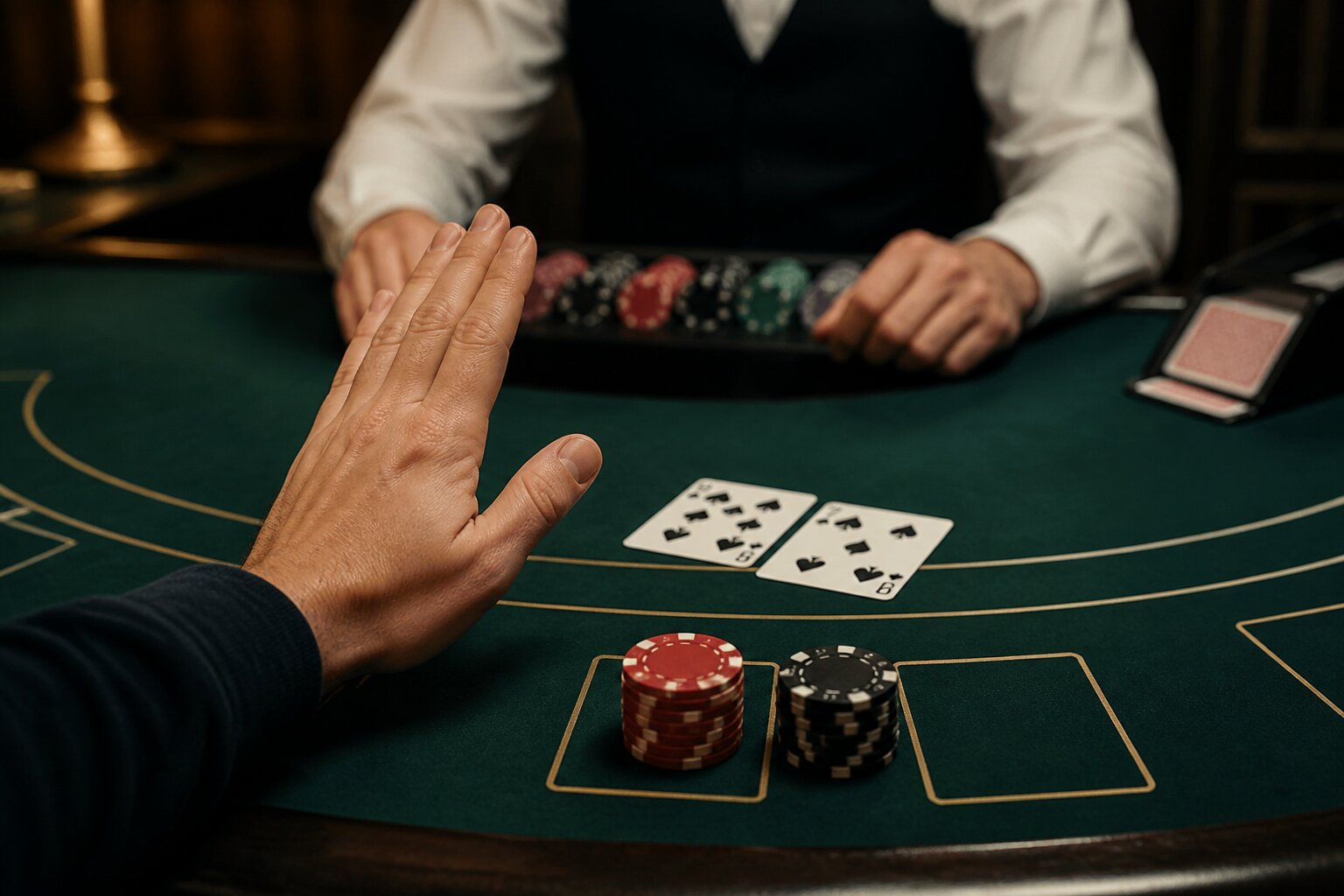
Using surrender in a live casino typically involves telling the dealer or making the table’s standard hand signal after your first two cards. The dealer will confirm whether surrender is permitted at that table and return half your bet if you choose to surrender.
Online games that include surrender usually display a dedicated button on the game screen once your initial cards are dealt. Activating that button will forfeit the hand and automatically return half of your stake according to the game rules.
Before you play, consult the table information or help section to learn which surrender variant is offered and how the feature is handled in that specific game.
Is Surrender Available In Online Blackjack?
Some online blackjack titles include surrender and others do not; availability is determined by the particular game version and its rule set. This can vary between software providers and operators, and between random-number-generated (RNG) table games and live-dealer tables. Live-dealer games often mirror a casino’s land-based rules more closely, while RNG games may use a range of different rule sets.
When present, surrender is often presented clearly on-screen as an action alongside other standard options, such as:
- Hit
- Stand
- Double down
If you want to use surrender, check the game’s rules or paytable before you start. The help or information area will state whether surrender is supported and whether it is early or late surrender, which affects when the option is usable. Also look for any notes about partial surrender, table limits, or whether the option is disabled in certain game modes or on mobile devices.
Common Myths About Surrender Busted
A few misconceptions about surrender persist. One is that surrender guarantees long-term savings. In truth, surrender can reduce losses on selected hands by returning half your bet, but it does not alter the overall house edge in a way that guarantees profit over time. It is a tool to limit expected loss on specific unfavourable situations, not a method to turn a losing game into a winning one.
Another myth is that surrender indicates poor play. On the contrary, using surrender in the right situations is a strategic decision, similar to choosing to hit or stand. It is chosen to manage expected loss based on the dealer’s visible card and your hand composition. When used correctly, it can be the mathematically correct option and part of basic strategy rather than a sign of weakness.
Finally, not all tables offer surrender. Rules vary between casinos and even between tables in the same venue, including whether early or late surrender is allowed and whether surrender is offered against certain dealer upcards. Checking the table rules before you play avoids assuming the option exists and prevents unpleasant surprises when play begins. Also confirm any local house limits and how the surrender is paid so you know exactly what to expect.
Mistakes To Avoid When Using Surrender
Treat surrender as a tactical choice rather than a default. Using it indiscriminately, or reacting out of frustration, can worsen results. Make sure the table actually offers surrender and be clear whether it is early or late, because that detail affects whether the option is valid after the dealer checks for blackjack.
Also be mindful of how surrender fits with other choices at the table; splitting or doubling in different rule sets can change the relative value of surrender. Keeping control of your budget and playing with considered decisions will help you use surrender effectively when it truly makes sense.
Summary: Making The Most Of Surrender In Blackjack
Surrender is a useful option that lets you reduce losses on specific two-card hands by giving up half your bet. Its value depends on the type of surrender offered and the particular matchup between your hand and the dealer’s up-card. Use it selectively, informed by the table rules and the situation at hand, rather than as a reflex.
Check the game information before you play to know whether surrender is available and how it is implemented. When used judiciously, surrender can be a helpful part of a measured, rule-aware approach to blackjack. If you’d like to try tables with this option, take a look at the game rules first and choose games that match the surrender type you prefer. If play ever stops being enjoyable, support is available to help.
**The information provided in this blog is intended for educational purposes and should not be construed as betting advice or a guarantee of success. Always gamble responsibly.