
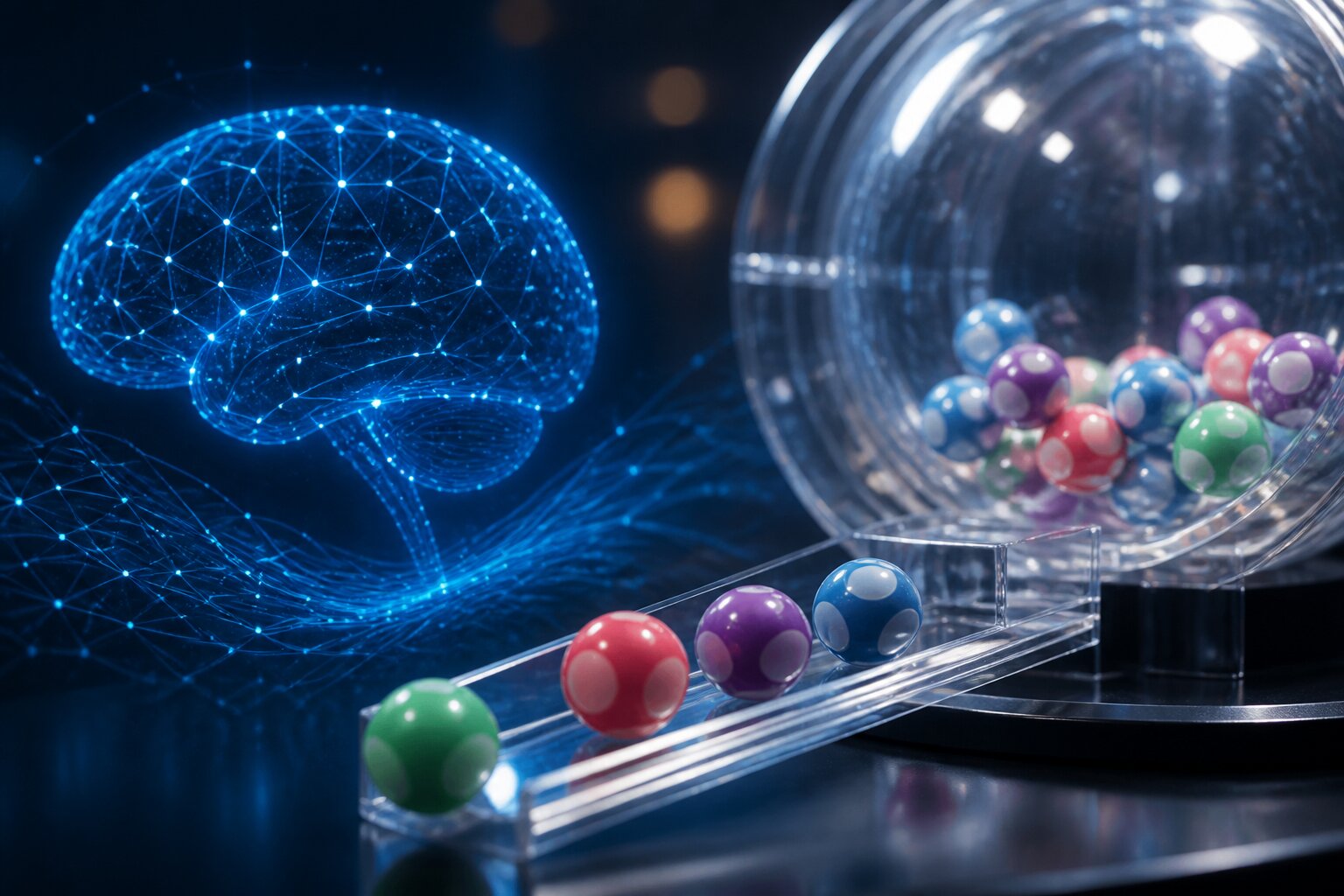
Imagine never having to worry about picking numbers again because a clever computer could do it for you. It sounds like something from a sci‑fi film, doesn’t it?
With all the interest around artificial intelligence, lots of people wonder whether machines might finally crack lottery patterns. Could algorithms and advanced software change how we think about draws and jackpots?
Before you act on any headline or buy a ticket because a programme suggests certain numbers, let’s look closely at what AI can and cannot do when it comes to predicting lottery outcomes.
How Does Artificial Intelligence Work in Lottery Analysis?
Artificial intelligence is a set of techniques that allow computers to analyse very large datasets and highlight correlations that would be hard for a person to spot. When applied to lotteries, AI tools typically ingest many past draw results, then search for repeating sequences, frequency imbalances, or statistical anomalies.
Some systems will report that particular numbers appear more often, or that certain pairs show up together. That can sound compelling, but regulated lottery draws are designed so each draw is statistically independent. Outcomes aren’t influenced by previous draws; a previous appearance of a number has no bearing on whether it will appear again.
So, while AI can map and present historical patterns in exhaustive detail, those findings don’t translate into a reliable edge for future draws. The technology is useful for data exploration and for presenting probabilities, but it does not change the underlying randomness that governs official draws.
The Science Behind Random Number Generation in Lotteries
Official lotteries use carefully controlled methods to ensure fairness. Many employ certified random number generators (RNGs) or mechanical draw machines, both subject to independent testing and strict oversight to prevent predictability or manipulation.
RNGs are engineered to produce sequences that pass rigorous statistical tests for randomness. Regular audits and certification mean the systems must meet high standards so players can trust the integrity of each draw. These protections are precisely why historical patterns—no matter how neatly summarised by AI—do not reliably forecast future results.
In short, the mathematics and controls behind regulated draws are built to prevent any persistent advantage. AI can help explain what happened in the past, but it cannot alter the properties of an audited RNG or a properly conducted mechanical draw.
What Are the Most Common Myths About AI Predicting Lottery Results?
A persistent myth is that AI can "crack the code" and accurately choose future winning numbers. Another is that analysing past results provides a sound strategy for future picks. Both ideas misunderstand the nature of independent draws; past outcomes do not influence the next result.
There are also commercial products and services that market systems or algorithms as a shortcut to higher odds. These claims often rely on selective presentation of data or misunderstanding of probability. A programme can show what has happened before, but that doesn’t change the equal likelihood of each possible result in a properly managed draw.
If you’re evaluating any service that promises improved chances, look for clear evidence, independent verification, and transparent methodology. Absent that, these offers are best treated with scepticism.
Are There Real-Life Examples of AI Used in Lottery Predictions?
Stories circulate about people using machine learning or pattern-detection tools to predict winning numbers. Often these reports highlight a few instances where someone won a prize and then retroactively attribute it to AI. In every well-documented example, the outcome is consistent with probability rather than a reproducible predictive method.
AI has been applied more plausibly in adjacent areas: analysing player behaviour, improving site security, and spotting suspicious activity. These applications use pattern recognition for operational purposes, not to forecast draw results. When you see claims of AI successfully predicting draws, treat them as anecdote rather than proof.
If an offer sounds too good to be true, it usually is. That’s especially the case when no independent body can replicate the claimed results.
Ethical and Legal Considerations of Using AI for Lotteries
Lotteries are governed by laws and licences that demand fairness, transparency, and consumer protection. Any use of AI in lottery contexts must comply with these requirements, including restrictions on misleading advertising and the handling of personal data.
Ethically, presenting AI as a way to gain an unfair advantage can harm players’ trust and encourage risky behaviour. It’s important for platforms and promoters to be clear about the limitations of any algorithmic tools and to avoid overstating what those tools can deliver.
Regulators also monitor claims that could mislead consumers. From a legal perspective, anyone using or promoting AI tools connected with gambling should ensure their practices meet regulatory standards and do not imply guaranteed or improved chances.
Is It Worth Using AI for Lottery Number Predictions?
AI does not increase the probability of winning a draw. Where it can add value is in making number selection more engaging or automating the process of generating combinations, but that is a convenience, not an advantage.
For many players, the appeal of AI comes from curiosity—seeing what an algorithm suggests and comparing it with a personal strategy. That’s a reasonable form of entertainment when treated as such. What’s important is keeping expenditure under control and recognising that any win remains a matter of statistical outcome rather than the result of a predictive breakthrough.
If you ever feel your play is becoming problematic, there are support services available such as BeGambleAware that offer guidance and assistance.
The Future of AI and Lottery Predictions
AI will continue to evolve and find uses across the gaming sector, but expectations should remain grounded. Improvements in data analysis can support fraud detection, improve user experience, or help operators understand participation patterns. Those are practical, measurable benefits.
However, the fundamental design of regulated lotteries—aimed at fairness and unpredictability—will limit AI’s ability to predict specific draws. Technology may influence the ecosystem around lotteries, but it won’t change the statistical nature of the draws themselves.
As you consider developments in this space, focus on verified improvements in safety, transparency, and user support rather than promises of predictive power. That way you stay informed about useful innovations without being misled by overstated claims.
**The information provided in this blog is intended for educational purposes and should not be construed as betting advice or a guarantee of success. Always gamble responsibly.