
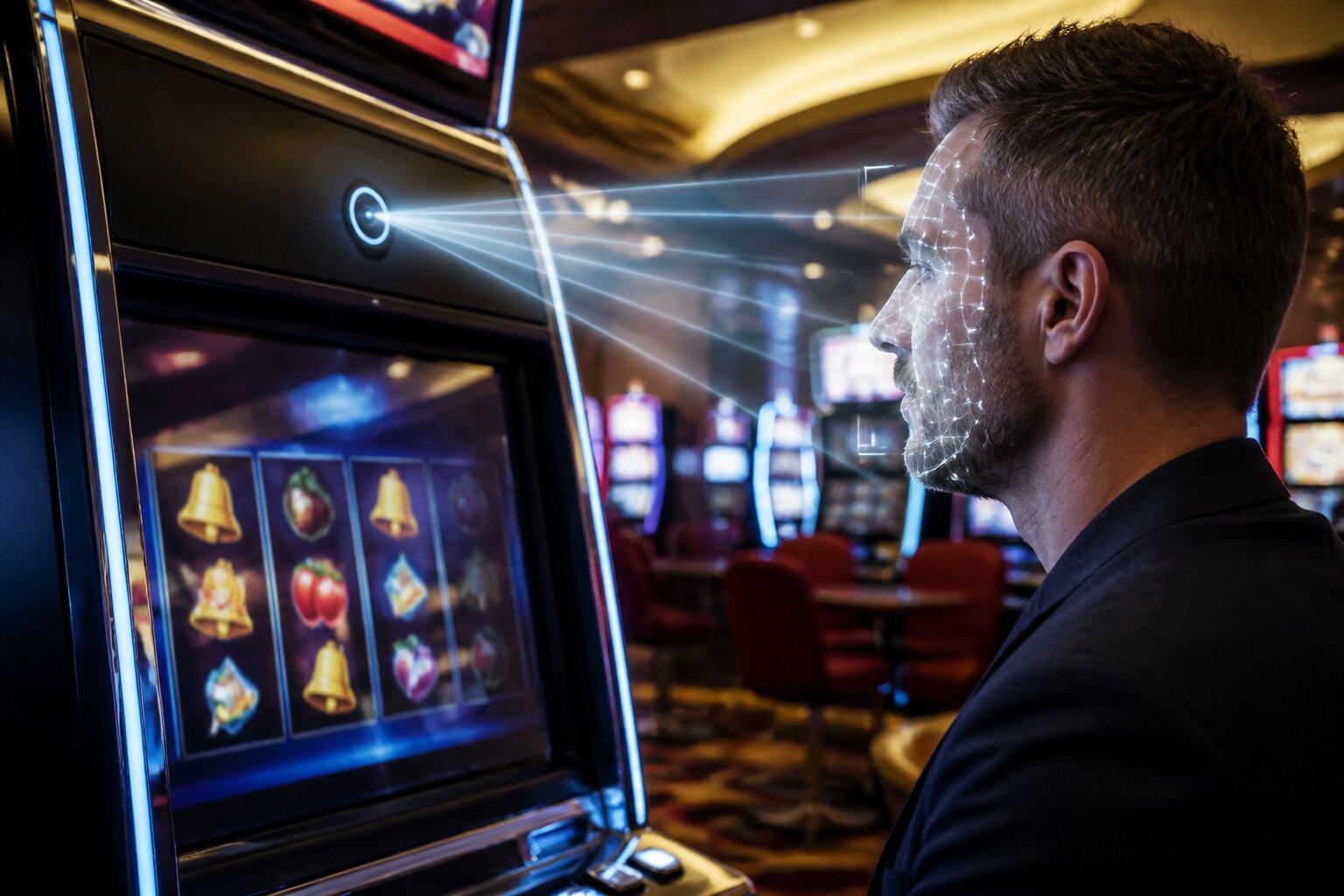
Ever wondered what goes on behind the flashing lights and catchy sounds of slot machines? Casino technology moves fast, and facial recognition has become one of the more talked-about developments in recent years.
This article separates fact from fiction about how that technology is used in venues, explains the protections around it, and looks at the other tech that keeps play fair and secure. Read on to find out what’s actually happening on the casino floor and how your privacy is managed.
What Is Facial Recognition Technology in Casinos?
Facial recognition is software that matches images of faces to stored records. In casinos, it tends to be deployed for venue-level checks — things like confirming identity at entry, helping with age verification, and supporting bans or self-exclusion requests.
Age verification is a practical use: if a venue has cause to check someone’s age, the technology can speed up matching a person to their ID and reduce the chance of underage access. Equally, if someone has self-excluded, the system can flag their presence so staff can respond in line with the venue’s policies.
Data protection laws require that any biometric data collected is handled with care. Casinos must make clear why they gather facial data, how long it will be kept, and the legal basis for doing so. That framework is designed to keep the technology focused on safety and compliance rather than broad surveillance.
How Does Facial Recognition Work With Slot Machines?
When cameras and recognition software are used near slot machines, their purpose is security and venue compliance rather than the games themselves.
Cameras in public areas can detect a person who is barred or on a self-exclusion list and alert staff before play begins. The process is intended to be discreet and to prevent someone from gambling when they have asked not to. It can also prompt an age check if staff have reason to suspect a player is under the legal limit.
The important point is that game outcomes are unaffected by these systems. Game results are determined independently by certified random number generators and regulated procedures; facial recognition does not interact with those processes.
Why Do Casinos Use Facial Recognition?
Casinos apply facial recognition to achieve several practical aims: preventing fraud, enforcing bans, and supporting identity checks. These uses help venues meet regulatory obligations and maintain a safer environment for patrons.
The technology makes it easier to identify known problem behaviours or individuals who have been restricted from the premises. That reduces the risk of criminal activity and helps staff intervene when someone needs assistance under the venue’s policies.
Using recognition for these purposes also provides an audit trail for compliance checks. When applied within the legal framework, it becomes a tool for accountability as much as for security.
Privacy Concerns With Facial Recognition at Casinos
It’s understandable to have concerns about facial data being collected. UK data protection rules set strict limits on what can be done with biometric information, and venues must be transparent about their practices.
Operators are required to state the legal basis for processing biometric data, explain how long it will be retained, and outline who has access. Where possible, data should be minimised and deleted once it is no longer necessary. Independent oversight and audits are another layer of protection.
If you are unsure how a venue uses facial recognition, you can ask for their privacy statement or data-handling policy. That gives a clear picture of what is collected, why it is needed, and the controls in place to safeguard it.
Are Slot Machines Watching You? Separating Fact From Fiction
There’s a persistent myth that slot machines “watch” players or change outcomes based on who’s at the machine. That is not how regulated machines operate. Outcomes are determined by random number generators and the machine’s certified design, not by the identity or behaviour of the person playing.
Machines are tested and certified to ensure fair play and compliance with regulatory standards. Independent laboratories and regulators check the software and hardware to confirm that spin outcomes and payout structures work as intended.
Cameras used for security and recognition operate separately from the gaming system. They are part of venue-level security and monitoring, and they do not feed data into the game mechanics or influence spin outcomes.
Surveillance systems typically serve practical, non-game functions such as:
- maintaining general security and deterring theft or disorder
- monitoring venue capacity and crowd safety
- supporting investigations or regulatory compliance when required
So while surveillance technology may be present in parts of a casino, the machines themselves remain isolated from those systems in terms of game operation and payout functions. Players can be reassured that, in regulated environments, outcomes are driven by certified systems rather than by external observation.
What Other Technologies Do Modern Slot Machines Use?
Beyond cameras and recognition systems, modern machines incorporate a range of technologies designed to ensure fairness and provide clearer information to players.
Random number generators are central: they determine outcomes and are subject to independent testing to meet regulatory standards. Digital displays and user interfaces make rules and paytables easier to read, and many systems support cashless play or player cards for account-based features.
Some venues link machines to central systems that support automated checks, such as verifying a player’s age at entry. Player management systems can also allow individuals to set limits on spend or session time if they choose, supporting personal control.
All these technologies are applied to keep the gaming environment transparent and to help venues meet their obligations.
Is Facial Recognition Technology Legal in British Casinos?
Facial recognition can be used legally in British casinos, but only within the boundaries of data protection law and gambling regulation. Casinos must navigate both the Information Commissioner's Office requirements and the Gambling Commission's expectations when deploying these systems.
Operators must have a lawful basis for processing biometric data and comply with data protection principles. They should also:
- provide clear, accessible privacy information to customers about how images and data are collected, used and retained,
- ensure the technology meets relevant technical and security standards, and
- conduct appropriate impact assessments and keep records to demonstrate compliance.
Regulators expect these tools to be used proportionately and only where necessary, with measures in place to protect individuals' rights and minimise intrusion. Independent auditing, staff training and complaint-handling procedures are commonly required to show safeguards are effective.
Breaches of these requirements can result in enforcement action, fines, licence conditions or other sanctions, and can cause significant reputational harm, so venues have strong incentives to follow the rules closely.
Pros and Cons of Facial Recognition in Casino Environments
Facial recognition brings benefits and trade-offs that venues and visitors both weigh. The technology can deliver practical advantages for operators, but it also raises questions that need careful management and clear governance.
On the plus side, it helps enforce bans and self-exclusion, strengthens age checks, and can improve the speed and accuracy of identity verification. These functions support compliance and can reduce some types of fraud or harm.
- It assists in identifying individuals who are barred from premises or who have chosen self-exclusion, supporting safer gambling measures.
- It can make age verification more reliable and consistent, reducing the risk of underage access.
- It speeds up identity checks at entry or cash-out points, improving customer flow and reducing human error.
On the other hand, people may have reservations about biometric data being processed, and there is always a need to ensure retention periods are appropriate and access to data is tightly controlled. The balance between safety and privacy depends on clear policies, rigorous oversight, and transparent communications with customers.
- Customers often have concerns about how long images or templates are stored and who can view them, so retention schedules must be proportionate and compliant with data protection rules.
- Access controls and audit trails are essential to prevent unauthorised use and to show regulators that the system is being used responsibly.
- Transparent notices and opportunities for customers to ask questions or lodge complaints help build trust and demonstrate accountability.
When deployed, facial recognition should be part of a wider responsible gambling and data protection framework, with regular reviews, impact assessments, and staff training to ensure the system delivers benefits without compromising individual rights.
The Future of Casino Security: Will Facial Recognition Become Standard?
Technology will continue to evolve, and facial recognition could become more widely used where it demonstrably improves compliance and customer protection. Any increased adoption will be shaped by regulation, public trust, and technical safeguards.
Researchers and regulators will keep testing how these tools perform in practice and updating guidance accordingly. That means operators who choose to deploy recognition systems must do so within a framework that prioritises privacy, clear justification, and proportionality.
As the industry moves forward, the key test will be whether security gains are achieved without compromising the rights and expectations of visitors. If that balance is maintained, such measures can play a useful part in a modern, well-regulated venue.
Final thought: when used within the required legal and ethical boundaries, facial recognition can support safer, more accountable operations without affecting how the games themselves work.
**The information provided in this blog is intended for educational purposes and should not be construed as betting advice or a guarantee of success. Always gamble responsibly.