
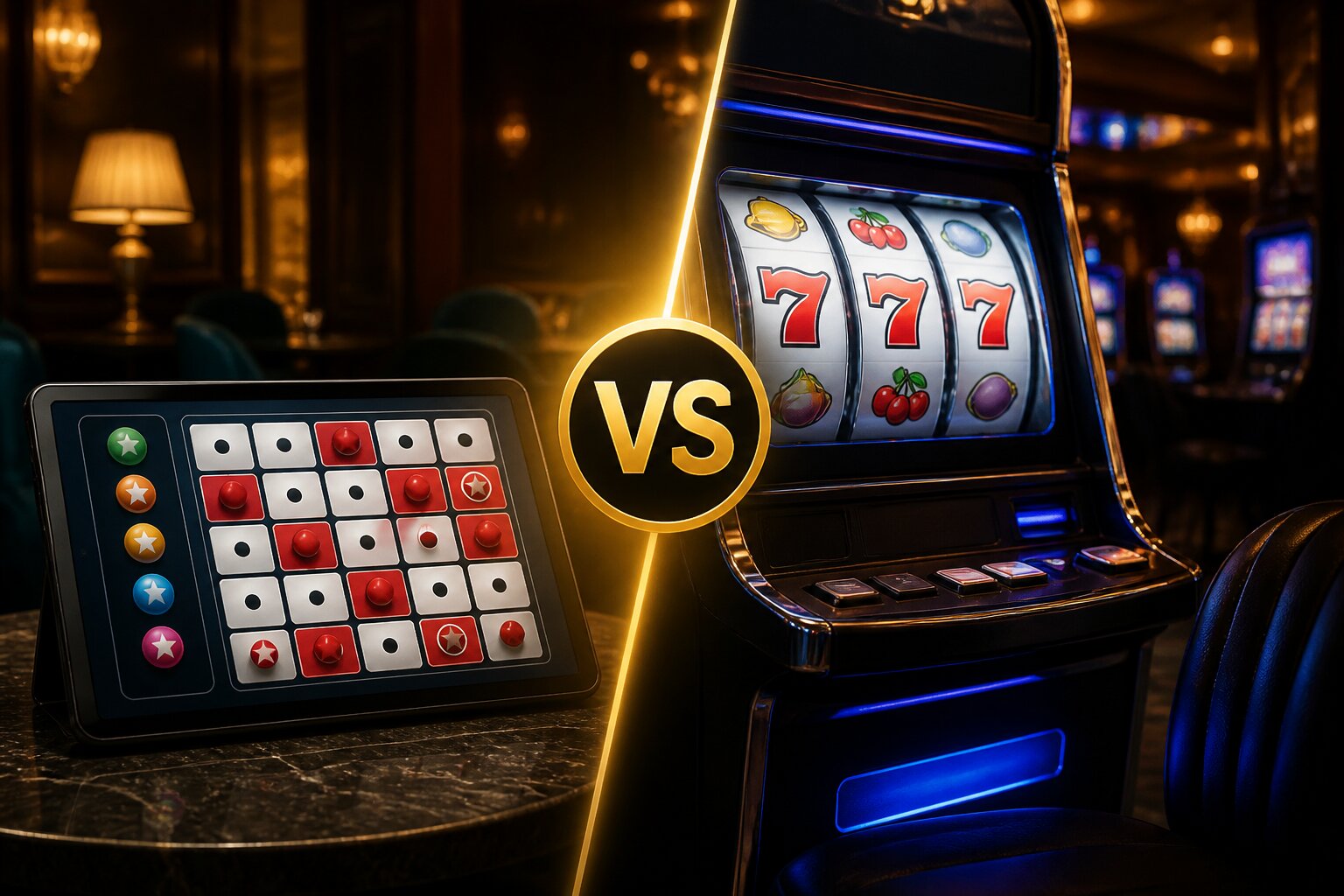
When it comes to online gambling, picking the right game can shape both your experience and how you manage your money. Two popular choices are Slingo and traditional slot games, and comparing their payout figures helps you make informed decisions about what to play.
This article breaks down the key concepts—what RTP means, how volatility affects payouts, and which format might suit different playing styles—so you can choose with confidence and keep control of your spending.
How Do Slingo and Slot Games Differ?
Slingo mixes elements of bingo with slot mechanics. You spin reels to mark numbers on a bingo-style grid, aiming to complete horizontal, vertical or diagonal lines—called Slingos—within a fixed number of spins. The game blends chance with light interaction, since players sometimes encounter choices like buying extra spins or activating power-ups that alter the round.
Slot games centre on spinning reels and matching symbols across paylines. Each title offers a theme, paytable and bonus features, but the core loop is consistent: spin, watch the result, and collect wins where symbols align. Slots often present faster rounds and a steady visual rhythm, while Slingo can feel more like a sequence of small puzzles as the grid changes.
Both formats appear in many styles and volatility profiles, so whether you prefer a more involved session or quick spins, there are plenty of options to try. Ahead we’ll look more closely at how payout measurements work and what they mean for your play.
Understanding Payout Rates and RTP
Payout rate and RTP (Return to Player) express the same basic idea: the percentage of total stakes that a game returns to players over a long timeframe. If a title has a 95% RTP, that indicates, in theory, that £95 is returned for every £100 wagered across many plays. RTP is a statistical long-term average and does not predict short-term results.
These figures are calculated from the game’s rules and prize distribution. They matter because they show how generous a game is over many sessions, but they do not provide guarantees for any single session or spin. RTP and payout rate are tools to compare games rather than precise forecasts of what an individual player will receive.
Keep this in mind as you read the RTP examples that follow, which help frame what to expect across different Slingo and slot titles.
What Are Typical RTP Ranges for Slingo and Slot Games?
Slingo titles commonly fall between about 94% and 97% RTP, though individual games can be higher or lower depending on bonus mechanics and prize structures. Some Slingo variants that include extensive bonus rounds may sit at the lower end of that range because extra features can change how the return is distributed.
Slot games show a wider spread overall, typically from roughly 91% up to 97% or more. Classic reels and simpler, older slots tend to appear toward the lower side, while many modern video slots aim for mid-90s RTP to remain competitive. The specific RTP for any game is normally shown in the game information or paytable.
Knowing typical ranges helps when choosing titles, but volatility and session length will influence how those percentages feel in practice. Next we’ll examine how volatility shapes payout patterns during play.
Comparing Game Volatility and Payout Potential
Volatility describes how frequently and how much a game pays out. Low-volatility titles reward players with smaller, more frequent wins, creating steadier sessions. High-volatility games deliver larger prizes but far less often, producing more dramatic swings in a session’s balance.
Slingo and slot games each come in low, medium and high volatility variants. In Slingo, volatility can be influenced by grid size, the number of spins and whether power-ups are available; in slots, it’s driven by payline structure, symbol values and the design of bonus features. A game’s RTP might be similar across volatility types, but the tempo and size of wins you experience will differ.
How long you play also affects how volatility feels. Short sessions might stop before a high-volatility game ever hits a rare big win, whereas longer sessions increase the chance of seeing a wider range of outcomes. With this in mind, thinking about session length alongside volatility helps match a game to the type of experience you prefer. The next section considers whether one format tends to suit UK players more than the other.
Are Slingo or Slot Games More Favourable for UK Players?
In practice, neither Slingo nor slot games are consistently superior in terms of RTP; both formats offer titles across the same general range of returns. What distinguishes them is the style of play and the mechanics that control prize distribution—elements you can weigh depending on personal taste.
Game fairness is ensured through independently tested algorithms and regulatory oversight, so outcomes are determined by the game’s design rather than predictable patterns. This means decisions about which to play should focus on pacing, feature sets and volatility rather than expecting any one category to deliver better long-term returns.
With similar RTP profiles available in both types, choosing a game that matches your preferred session length and interaction level becomes the sensible route. That leads into the next discussion about which game types fit different player preferences.
Which Game Type Best Suits Different Playing Styles?
If you enjoy tracking progress and occasionally making choices that affect a round, Slingo’s hybrid format is likely to appeal. Its card-and-grid layout introduces a sense of incremental achievement as lines fill, and bonus mechanics can change the rhythm of play in mid-session.
Slots suit players who prefer shorter, straightforward rounds and the visual spectacle of reels and animated bonus features. The variety of themes and specialised mechanics—from cascading reels to multi-level bonus games—means there are slot titles tailored to many tastes.
Volatility influences this match too: a player wanting steady, predictable sessions might opt for low-volatility slots or Slingo variants, while someone seeking occasional large payouts may prefer high-volatility titles. Considering these tastes alongside RTP and session planning helps pinpoint the best match for how you like to play. The final section summarises the practical points to take away.
Key Takeaways: Choosing Between Slingo and Slots
Both Slingo and slot games are designed for entertainment and present a range of RTPs and volatility levels. Rather than expecting one format to deliver better theoretical returns, focus on the style of play, how often you want wins to occur, and the features that you find most engaging.
Check a game’s RTP and volatility before playing to ensure it fits the kind of session you want. Pick titles that match your preferred pace and involvement, set sensible limits on time and spend, and treat play as entertainment rather than a source of income. With those considerations in mind, you can select games that suit you and enjoy a more satisfying experience overall.
**The information provided in this blog is intended for educational purposes and should not be construed as betting advice or a guarantee of success. Always gamble responsibly.