
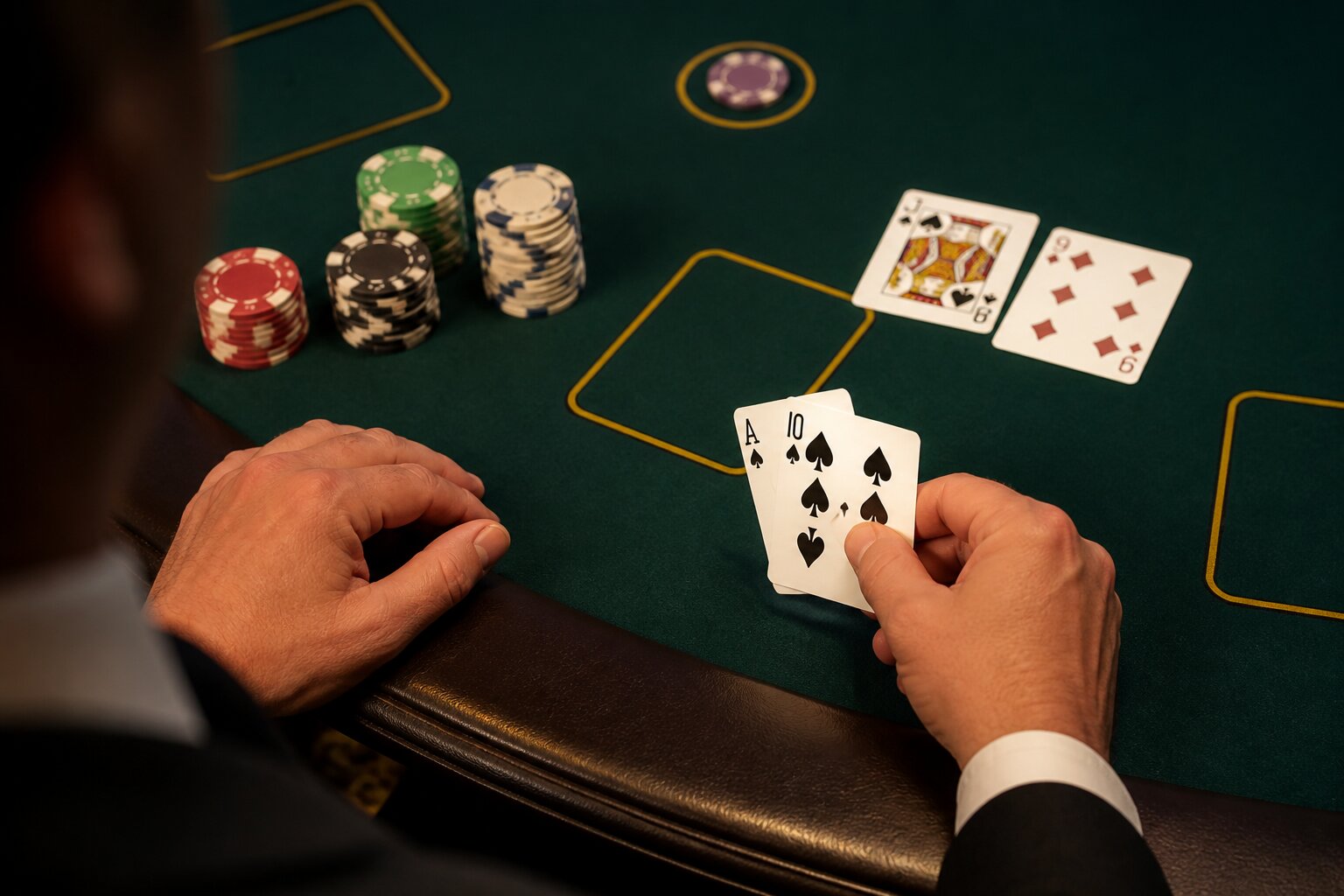
Ready to dive into blackjack? Whether you’ve seen it in films or spotted it at a casino, blackjack is a classic card game that’s easy to learn and full of strategic choices.
This guide walks you through the rules, card values, and the decisions players face at the table. Expect clear explanations, practical examples and small pointers to help you feel confident when you join a game.
If you’re starting from scratch or refreshing what you know, read on to get a solid, practical grasp of how blackjack works.
What Is Blackjack?
Blackjack, often called “21”, is a card game in which the aim is to have a hand value as close to 21 as possible without going over. Players sit at a table and play against the dealer rather than against each other.
The game uses standard decks of cards; some casinos use a single deck, others use several. Each player receives two cards at the start and chooses whether to take more cards to improve their total. Face cards—Kings, Queens and Jacks—count as 10, number cards count at face value, and Aces can be 1 or 11 depending on which suits your hand best.
Its concise rules and clear scoring make blackjack accessible to beginners while leaving room for strategic decisions that experienced players enjoy.
What Are the Basic Rules of Blackjack?
Each round begins with two cards dealt to every player and two to the dealer, one of the dealer’s cards usually shown face up. The objective is to end the round with a hand value nearer to 21 than the dealer’s, without exceeding 21. If a hand goes over 21, it’s a bust and that bet is lost.
Players take turns deciding whether to take another card (hit) or keep their total (stand). Once every player has finished, the dealer plays by fixed rules: they draw until they reach 17 or more, and must stop on 17 or higher. These dealer rules are uniform, so you can plan your play with that in mind.
Remember that blackjack is for adults only in the UK; check the legal age and always follow table rules when you play.
Understanding the Objective of the Game
The goal is straightforward: finish the round with a hand total closer to 21 than the dealer’s, without going over. You never need to worry about other players’ hands except as they affect the game flow. Each hand is a separate contest between you and the dealer, so your decisions only need to account for your own cards and the dealer’s visible card.
There are three basic outcomes for any hand. These outcomes influence both how you approach betting and the choices you make during play:
- A winning hand returns a payout to you.
- A losing hand means you forfeit your stake.
- A tie, known as a push, returns your original bet.
Understanding these results helps you manage your stakes and decide when to take risks or play conservatively. Remember to gamble responsibly and only wager sums you can afford to lose.
How Are Cards Dealt in Blackjack?
At the start of a round, the dealer distributes one card at a time to each player and then to themselves, so each participant ends up with two cards. This sequential dealing helps keep the order clear and reduces the chance of mistakes during the deal.
Players’ cards are usually dealt face up so they can see their own totals. The dealer typically shows one card while keeping the other face down until players finish their turns, which is known as the hole card. Revealing only one dealer card preserves some uncertainty and is part of the standard game structure.
Dealing procedures follow standard practice to ensure fairness, and casinos monitor play closely to maintain those standards. Knowing that the dealer’s upcard is visible helps you weigh options during your turn, for example:
- Assessing whether to hit, stand, double down or split based on the dealer’s visible strength.
- Comparing your total to the likely range of the dealer’s hand.
- Deciding how aggressive or conservative to be with your bets and choices.
These observations are part of normal game strategy and do not guarantee outcomes. Casino rules and monitoring are there to ensure the game is conducted consistently for all players.
What Do the Different Card Values Mean in Blackjack?
Card values are simple and central to decision-making.
- Number cards (2–10) count at face value. For example, a 4 and a 7 together make 11.
- Jacks, Queens and Kings count as 10. Any of these are worth the same as a 10-card for the purposes of adding up a hand.
- Aces can be counted as 1 or 11 depending on which is more advantageous for the hand. When an ace may be counted as 11 without busting, the hand is called a soft hand; if the ace must be counted as 1 to avoid going over 21, it is a hard hand.
These values influence the basic choices you make during a round and how you manage risk. They affect whether you:
- Hit: take another card to try to improve your total.
- Stand: stop taking cards and keep your current total.
- Double down: double your stake and take exactly one more card.
- Split: separate two cards of the same value into two hands and place a second stake.
Understanding how card values combine helps you judge the probability of improving a hand and guides whether to be more aggressive or cautious with each of these options.
What Are the Main Player Actions?
Familiarity with the standard player options helps you navigate each round with confidence. These actions give structure to play and influence possible outcomes.
- Hit: Take another card to increase your total.
- Stand: Keep your current total and end your turn.
- Double Down: Increase your stake by the same amount as your original bet, take one further card and then stand.
- Split: When your first two cards are the same value, you can divide them into two separate hands, each played with its own bet.
Grasping these actions lets you adapt to different situations. For example, doubling down can be useful when your total suggests a favourable chance to improve with just one card, while splitting turns a pair into two opportunities to win.
How Is the Dealer’s Hand Played?
After players finish their choices, the dealer reveals the facedown card and completes the hand according to fixed rules. The dealer has no discretion and follows the house procedure exactly, so their actions are mechanical rather than personal.
Usually the rules are straightforward and easy to anticipate. For example:
- The dealer draws on totals of 16 or less.
- The dealer stands on totals of 17 or more.
Some casinos may specify how a soft 17 is treated, which can affect the exact sequence of draws, so it is worth checking the table rules before you play.
Because the dealer follows a fixed routine, strategic decisions at the table often hinge on the dealer’s visible card and how your hand compares to possible dealer totals. This predictability helps players plan sensible actions, while still leaving room for the usual elements of chance.
What Are the Different Outcomes in Blackjack?
At round end there are three principal outcomes. Each determines whether you receive a payout, lose your stake, or have your bet returned.
-
Win: Your hand is closer to 21 than the dealer’s without exceeding 21. Some wins are treated specially, for example a natural blackjack (an ace and a ten-value card on your first two cards) often pays at a higher rate depending on the table rules. Check the table or game rules so you know the exact payout before you play.
-
Lose: Your hand goes over 21 or the dealer’s total is closer to 21. When this happens the stake for that round is lost. If you choose options such as surrender, in games that offer it, you may be able to recover part of your stake — again, check the rules on the specific game.
-
Push: Your total equals the dealer’s total. In this case your original bet is returned and no money changes hands for that round.
Each hand is independent, so results from past rounds do not alter the mechanics used to decide outcomes in future rounds. Understanding these possible results can help you manage expectations and shape a sensible betting approach.
Play responsibly: set limits, stick to your budget, and remember that outcomes are statistical and never guaranteed.
What Are the House Rules & Table Etiquette?
Casinos set house rules that cover a range of practical matters. These typically include:
- bet limits,
- when particular actions are permitted,
- how side bets are handled.
It’s good practice to check these specific rules at the table before you begin, and to ask the dealer or floor staff for clarification if anything is unclear. Different venues, and even different tables within the same venue, can have slightly different procedures.
Politeness and clear communication matter too. Be aware of other players and the dealer so the game proceeds smoothly.
Follow these basic courtesies:
- Wait until it’s your turn before acting.
- Use accepted signals or a clear spoken word to indicate your choice.
- Follow the dealer’s instructions promptly.
- Avoid giving unsolicited advice to other players.
- Do not touch other players’ chips.
- Minimise unnecessary distractions, such as loud conversations or phone use.
Considerate behaviour helps keep the game flowing and enjoyable for everyone, and it reduces the chance of disputes or mistakes. If a disagreement arises, involve the dealer or floor supervisor rather than arguing at the table.
Are There Common Myths About Blackjack?
A few misconceptions circulate among newcomers. Common examples include:
-
Thinking that sitting in a particular seat or following certain patterns will change your odds. Where you sit at the table does not affect how cards are dealt, so position does not alter the mathematics of the game.
-
Believing that previous hands influence future hands. Each round is dealt independently, and outcomes cannot be predicted from past results or perceived streaks.
Some people also claim certain systems or betting schemes guarantee success. While basic strategy and sensible money management can improve your decision-making and reduce the house edge, no method can ensure a win every time. Relying on unproven shortcuts can lead to bigger losses, not consistent profit.
Focus on learning the rules, practising sensible strategy, and managing your stake sizes. If you choose to gamble, set limits, only play with money you can afford to lose, and seek help if gambling becomes a problem.
Essential Blackjack Terminology for Beginners
A handful of terms will make your first visits much easier to follow. Knowing them helps you act confidently at the table.
- Hit: Request an extra card.
- Stand: Keep your current total.
- Bust: Exceed a total of 21 and lose the hand.
- Dealer: The person operating the game and managing bets and payouts.
- Double Down: Double the original stake, take one card and then stand.
- Split: Separate two equal-value cards into two hands, each with its own bet.
- Push: A tie with the dealer; the stake is returned.
Understanding these words reduces confusion and helps you participate smoothly in play.
Where Can You Play Blackjack in the UK?
Blackjack is available in both physical casinos and online platforms across the UK. When choosing where to play, look for a licensed operator that follows regulatory standards to ensure fair play and consumer protections.
Land-based venues provide a traditional table experience with professional dealers, while online sites often offer digital versions or live-dealer streams that recreate the casino environment. Always verify an operator’s credentials and follow age and identity requirements.
If you’d like to try the game without financial risk, many operators offer practice tables or play-for-fun modes where you can apply what you’ve learned before staking real money. This is a useful way to get comfortable with the pace and flow of rounds.
Final thoughts: take your time, learn the options available to you at the table, and make choices that suit your own approach — that way the game stays enjoyable and well managed.
**The information provided in this blog is intended for educational purposes and should not be construed as betting advice or a guarantee of success. Always gamble responsibly.